Saturday, May 18, 2013

David and Goliath: Taking on Glyphosates and Monsanto

Blogspot
There are many David and Goliath stories these days, stories it seems we love to hear. Perhaps we are comforted to think our actions count, that we can really do something. Even the Dali Lama gets into it with the famous quote, If you think you are too small to make a difference, try sleeping with a mosquito.

I do not mean to discredit this. I believe it is true. But while what we do individually is important, but it is also critical that on some issues we act politically. Which brings me to the use of glyphosate (as in Monsanto’s Roundup) in weed suppression.

A new peer-reviewed report, published in Entropy, April 1913, by M.I.T. researcher Dr. Stephanie Seneff and retired science consultant Anthony Samsel, shows that glyphosate may be much more dangerous to humans, other mammals, and plants, than was previously believed. Glyphosate was understood to act only on plants, but what was overlooked is the fact that the chemical does affect the gut bacteria in animals. Glyphosate residues in foods commonly eaten by most of us everyday “enhance the damaging effects of other food-borne chemical residues and toxins in the environment to disrupt normal body functions and induce disease,” thereby leaving us (and all mammals) vulnerable to autoimmune diseases such as diabetes, cancer, gastrointestinal disorders, as well as obesity, heart disease, autism, infertility, and neurological disorders, including Parkinson’s disease and Alzheimer’s disease. The study states, “Negative impact on the body is insidious and manifests slowly over time as inflammation damages cellular systems throughout the body.”

The report recommendation: more studies need to be done immediately and should these findings be upheld, glyphosate’s use needs to be drastically curtailed.

Of course, this is not music to Monsanto’s ears! Monsanto, the developer of Roundup, has sought to discredit any study questioning the use of its products. Jerry Steiner, Monsanto’s executive vice president of sustainability, states, “We are very confident in the long track record that glyphosate has. It has been very, very extensively studied (Huffington Post).”

What is true in this statement is that glyphosate has a long track record of making a lot of money for Monsanto, its use having increased eightfold from 1992 to 2007. As we know, Monsanto is a powerful corporation, even trying insert its interests into the current 2013 Farm Bill in limiting states’ rights to require GMO labeling. 

In the face of these studies questioning the health risks of the use of glyphosate, one would think that the EPA would limit or prohibit its use. But no! Instead, the E.P.A. is actually considering increasing the limit. A deadline of 2015 has been set for review. This study is one of many that has been submitted.

What can we do?

Individually we can vote with our dollars, not purchasing conventionally grown, unlabeled GMO food that almost certainly was sprayed and has glyphosate residue in it. This includes corn and any corn product, soy, canola oil, cottonseed oil, sugar beets, tomatoes, squash, potatoes, Golden rice, any meat fed non-organic grain (soy and corn), and GM salmon. If it is not certified organic or if you do not know your farmer's practices, don’t buy it. Children and the elderly are particularly vulnerable to GMO foods and the residues of glyphosate in them.

Stop using all glyphosate products such as Roundup in your yard, driveway, or in farming. (Paradoxically, when we stopped using Roundup in our vineyard, we stopped getting as many weeds.) Weeding and mowing are work, but they are honest and healthy occupations.

But it is also time to act politically. Consider contacting your congresspeople and the EPA, and donate money to organizations such as Organic Consumers Association which work politically to make sure these studies are taken into account. We cannot let ourselves be bullied by multinational corporations.

It is one thing to find out a product that we thought would make life easier actually is harmful. It is quite another to have corporate interests override research that questions their product at the cost of the health of so many of us, lobbying our legislators for their own interests. Glyphosate enters the waterways and our food chain, reminding us that we are one.  What impacts any one of us may well impact us all. To continue pushing products shown to be harmful, to suppress our right to know that these harmful products may well be in the food we ingest, all in the name of corporate profit, becomes something very big. Then it can even be called a crime against humanity.

Sunday, May 12, 2013

Getting to Know Grass: A Rant for Mother's Day

Gaia, by Genevieve Haven
We put too much on our kids. That was my reaction when I read a recent eco-article in Orion magazine. The author lamented the lack of snow this last winter, but through her children’s eyes. She described how her children waited all winter to sled, the snow not coming until spring, but by then they were too discouraged to go out.

I wanted to shout at her, Get a Grip! Tell your kids to get out there! You’ve been waiting all winter for this! Do you think Mother Earth schedules for your sledding pleasure? And go with them! Throw a snowball! Make an angel!

My second reaction was compassion. This was not the author’s children’s despair and grief, but her own. Children tend to be in the present, not thinking how it used to be, although they orient off their parents’ emotional states. As understandable as this mother’s grief is, and any of us open to the environmental crisis we are in, share it, it is grief that lived out unconsciously through children can be injurious.

Yes, I too cannot help but reflect on the increasing moodiness of Mother Earth’s seasons. Here in California the floods of December insured a reasonable yearly rainfall total. But then, from January on, we weathered the driest stretch of any “rainy season” on record. Meanwhile snowstorms blanketed the upper Midwest in April and May, and floods submerged lands of the Mississippi Valley after a year of devastating droughts. Mother Earth is no longer as consistent as she used to be, and we know we are culpable. Our grief, acknowledged, is key to action.

Getting to know grass
But our children are just arriving. You can’t grieve for what you do not know. Their task is not activism but getting to know Her. Even in Her moods, she is stunningly beautiful and powerful. The carpenter bees still visit the hummingbird sage; the monarch, the milkweed; the honey bees, so much more promiscuous, seemingly everything in bloom. The sunrise still scoots across the sky with the seasons and if you can find a dark enough spot, the stars still tell stories.

Children love to observe, and even more so when they have company in learning the interrelationships. They need dirt to dig in and little creeks in which to wade. Let them explore the Kingdom of Grass.

One of the most important things we can do for Mother Earth, and for our children, is to enjoy Her, not in an exploitative but related fashion. Studies are suggesting that this needs to happen before age 12, or bonding with the Earth may not happen. She is not here for our use, whether that be strip mining— or sledding (it’s the attitude). We are part of the web of life of which Mother Earth is also part. Teaching our children to be recognize their part in this web, observant and respectful, is important.

Later when they get older, having had their own experiences of grass, dirt, and water, they may well have developed practices that serve life. Then may they too become activists, as I hope many of us adults are, and may that activism be of the heart.


Saturday, May 4, 2013

Art and the Dark Sun of Consciousness: Bilbao's L'Art En Guerre

Perhaps there could not be a more appropriate venue for the French art show L’Art En Guerre France1938-1947, than the Bilbao Guggenheim Museum.

The show features artists, both famous and unknown, who painted throughout the occupation of France by Germany during the Second World War. These individuals suffered censor and/or detention and include Salvador Dalí, Jean Dubuffet, Marcel Duchamp, Max Ernst, Jean Fautrier, Alberto Giacometti, Wassily Kandinsky, Paul Klee, René Magritte, Henri Matisse, Joan Miró, and Pablo Picasso. In the case of a few, including Felix Nussbaum, Horst Rosenthal, and Charlotte Salomon, the art in the exhibit is all that remains of them as they were shipped to the death camps.

Some were detained for the content of their work, others imprisoned because they were communist or for their part in the Resistance or because they were Jewish or Gypsies. Upon detention many immediately began creating as a way to deal with the nightmare of the experience. Using scraps of paper and other discarded materials, they created booklets, paintings, and miniature dioramas depicting camp life, even a children’s book about a little boy in the camps. One is sobered by the efforts of these detainees who worked to keep the spirit alive through creative expression.

One section featured the art deemed aesthetically acceptable by the Germans. The figures were perfect, though oddly chilling, particularly next to the vibrantly emotive works of the French. During the Spanish Civil War, Pablo Picasso fled Spain, applying for citizenship in France, which was denied. He chose to live in Paris anyway, his work declared “degenerate” by the Vichy Regime whose motto was “ Work, Family, Homeland.” I am reminded of some of our own propagandas which call for narrowly defined “family values” and are actually attempts to stamp out expression of divergent feelings, attitudes, or life styles. 

Dora Maar au Chat, 1941, Pablo Picasso
Wikipedia.org
Of course, many of the detainees were of the French Resistance, a significant force in helping the Allies gain ground in France and eventually liberate them. This exhibit is a testament to the importance of expression. Through creative effort, not only was the spirit was kept alive in the face of such atrocities and hardships, but newly evolving art forms emerged. Never before released film clips of the of detainees returning to their communities after the occupation showed eyes stunned with the knowledge of what they had suffered. This footage of the rawness of the human spirit was that which also enlivened those now familiar works of Picasso and Matisse, Miro and Dali. 

Art offered the alembic to transform unspeakable acts of human violence, evil, and cowardice, and, as the occupation ended, the evolving knowledge of acts of courage. In the wake of this period was a task: in the words of the exhibit, the necessary “rejection of the belief in history’s radiant line (Decompression, L’Art en Guerre).” In so doing, these artists offer mature visions of war, of intolerance, of alchemy’s dark sun of consciousness. 

Interior, Bilbao Guggenheim.
Photo by Donald Harms.
This exhibit is housed in Frank Gehry’s Guggenheim in Bilbao. Gehry’s architecture stretches the psyche, transforming the unconscious acceptance of status quo into wonder. Upon first sight of the building, one can no longer assume anything about what will be experienced next. The soberly poetic and yet playful structure experiments with light, water, stone, and metal in surprising ways. The large reflecting pool surrounding the north side of the building visually melds the building with the river Nervión. The bridge arching over the river becomes an extension of the building, the transformation a seamless extension with what was and with what will be.


Wednesday, April 24, 2013

When People and Land Lose Each Other

Some of the broadest terraces still in use for grasses.
To left are small, steeper terracing with pine trees.
“Wild is what happened when white man arrived,” I once heard Native American scholar Greg Sarris say. Today as I walk these ancient Spanish paths that interlace several remote, abandoned villages throughout the southern Pyrenees of the Sobarbre area, I broaden the statement: wild is what too often happens when a people who have loved and lived on a land for centuries, leave.

The paths I walk are along stone-walled terraces, work done over centuries by mountain people who lived here since perhaps the 12th century. For centuries these terraces were used to graze livestock and grow cereal grains, but now pines are planted in rows, usually two rows to a terrace, and thorny bushes fill in between.

There is a convergence of reasons the mountain people left. In the 1950’s there were no jobs for the young women, so after the women went to the cities to become maids, for village people lacked education and these were the jobs open to them, the young men followed, becoming taxi cab drivers. This left the older people with the rigors of mountain farming. When the government offered to buy their villages, they took them up on it and within two or three years 14 villages in this area alone were abandoned, 400 villages in all of Spain.

But another story tells of how a threatened hydroelectric project which never came to fruition also pushed these people’s decisions to leave. One story tells how in preparation, the government planted small pine trees on the terraces to control erosion should the hydroelectric project go through, which made it impossible to use the terraces to graze cattle. Another story tells how the people feared even more isolation if the project did happen. There were no roads into these small villages. After they were abandoned, roads were made, mainly for firebreaks. Some say these independent people also wisely feared political reprisals.

A terrace with a stone retaining wall. Now the terrace
is the path and scrubby plants and pines grow.
The land is quiet today, the pine trees insuring that mountain way of life to be over. I would never suggest returning to that life. It is clear that the remoteness made for hardship and lack of what we consider essential: education, medical care, modern conveniences.

But there were positives: the rigors of the environment and harshness of the climate demanded that these people know the land in all its moods, as well as work with each other and with other villages for the welfare of all. They cooperated, at least enough of the time, so every one got his or her fair share. The elements forced it.

Church in Puyuelo and Memorial to a Native.
In the silence of the village I cannot help but wonder: Where are your people now? How did they recover from leaving land their families had farmed for centuries?

Walking between these pines, I wonder: what about land that has lost its people who knew it best? Those terraces so important for farming and erosion control crumble in places the road nicked the stone walls or changed drainage.

And why pines? Although they are native, I am told that this side of the mountain is drier, making pines a fire hazard. Oaks are the trees that grow naturally on this side.  In what way was that decision made? Probably not by consulting the mountain people! If humans are going to make such huge changes, may we also realize we need to know the land intimately, and the people as well,  to anticipate unintended consequences. In the words of forester Aldo Leopold, "…man-made changes are of a different order than evolutionary changes, and have effects more comprehensive than is intended or foreseen (A Sand County Almanac, 255)."

Today in entering the village of Puyuelo, I came upon a memorial stone at the ransacked church, a stone I assumed was for a man born and raised there. He died in 2010, born in 1924. His name and birth and death dates were followed by "D.E.P.", rest in peace. Only in death could he return home.

I felt a wave a grief as I continued down the village path to a large flowering pear tree next to a crumbling home, and then the stone-walled path leading on to another abandoned village below.

This village knew care from its people and its people were a people who knew their place in the whole of the area, both in its environmental needs and in the social benefits of cooperation with other neighbors. I can only wonder what this sudden evacuation and abandonment can mean both to those who were compelled to leave and to the beloved land from which they departed.

Tuesday, April 16, 2013

Pilgrimage Paths: On Being Foreign

Marker of The Way on birch tree.
I do not belong to this land. I feel it in my bones as I climb the paved paths of the Camino de Santiago through the Pyrenees, the path ever extending toward Galicia and onward to Santiago and the sea.  The scenery is stunning; the Basque houses neat and uniform in design: bulky white with wooden shutters and rafters and tile roofs.

I ask myself what is different from how I feel at home? I know my own land, the forested path to our home that was once a trade route west, the dry, fragrant air of summer and moist forest breath of winter. This land smells different. Its forests are deciduous birch and oak, not the oak savanna and bay laurel of the Napa Valley.

Yet difference is part of pilgrimage. The word pilgrim has its roots in Middle English from Provençal pelegrin and Latin peregrinus, ‘foreign.’ Peregrine falcons were so named because they were caught full grown as passage hawks, not taken from the nest and raised (American Dictionary). During the time this trail was first formed (12th century), Provençal was the language of troubadours and cultured speakers of southern France, a language also called langue d'oc and spoken in an area not that far to the east of where we are now.

Arrow and shell pointing The Way
Pilgrims ascending.
When we are out of our own territory, are we more likely to be observant, cautious, present? The word pilgrimage is associated with a journey to a sacred place, or a life's journey. Is a period of being a foreigner, a wanderer, a stranger, actually helpful in becoming an individual? These are questions I contemplate while walking through dense, leafless birch forests that have not yet felt the warmth of spring.

The only time that I've been lost so far, and I was hopelessly lost for what seemed like forever, was when I quit being observant and followed the pilgrims in front of me. They misread the signs at a Y in the road, signs that were actually very clear. From there on I have been very alert for the little yellow arrows, shells, or the red and white stripes that beckon The Way.

Pilgrimages are full of metaphors. It is easy to see everything that way after a few miles, right or wrong. I met an older man on the trail who was limping heavily. He told me he was hiking the entire 500 miles with a prosthesis. "If I go slow I will make it," he said.

I thought about this a while, wondering what his family said, along with a number of other practical questions, all of which are real stoppers if you pay too much attention to any them. But finally I thought, if he can do this, then surely I can as well. And I thought of all the reasons I give myself for other such pilgrimages in my life I do not embark upon for practical reasons.

There is an energy that builds as one walks a communal trail. I like to think that energy lingers for ages, renewed by each pilgrim walking it.


Thursday, April 11, 2013

Pilgrimage: Traveling with Leopold

Along the trail
Traveling with Aldo Leopold is a kind of pilgrimage, a focused awareness of what is present, and, once this is developed, feeling a participant with it.

Hiking along one the most ancient pilgrimage trails on earth, Camino de Santiago (and only portions of it), I brought only one book, my old (and lightweight!) paperback version of Aldo Leopold’s A Sand County Almanac, a book Leopold finished the year I was born. He received the acceptance from the publishers (some had said that it was unpublishable) the week before his untimely death while fighting a fire on a neighbor’s property. 

I see from an old receipt stuck between the yellowed pages that I bought it in San Francisco on June 19, 1998, a full year before my husband and I began farming biodynamically.  I remembered being bored by the book's pace. To read such detail about the snow tunnels of a mouse in January or the April sky dance of a mating woodcock was a little too much to keep my attention. I don't think I made it much past the woodcock. 

The preface to this edition by his son Luna B. Leopold and Carolyn Clugston Leopold, was dated June 1966, the month I graduated from high school. The youth generation that Luna addressed in the preface was my generation, the one demonstrating on college campuses against the Vietnam War and fighting for nuclear disarmament. Of all the causes that attract the attention of these young people, Luna declared, the plight of nature is one which may be truly a last call. Things wild and free are being destroyed by the impersonality of our attitude toward the land (xv).

What has ripened within me that suddenly this book is meaningful? I read it slowly, savoring this phrase, that idea, realizing that some 65 years ago he was able to pull together so much of what this time on earth is about. His descriptions afford an intimacy with the natural world that I too have experienced, an intimacy that summons grief for the loss of species and habitat. We grieve only for what we know (52), Leopold writes. 

Leopold begins the Foreword with the famous line, There are some who can live without wild things, and some who cannot. These essays are the delights and dilemmas of one who cannot (xvii). 

Now I can see how his very carefully documented observations weave him into the landscape, living the question of each specie's place in the whole, and in so doing, weaving himself in as well. It is a state that can be only described as love. I understand this state of mind, not unlike the one attained when my husband and I stir the Biodynamic preps while meditating on our land, or when I sit in my analytic consulting room, listening and observing to a flit of a feeling when she says this, or he dreams that. Perhaps it is the state of mind of dreamily watching a sunset or sunrise, of playing with a grandson, or perhaps enjoying a long dinner with old friends. It is a slowness that also can be flooded with grief for what is at risk, even, in this fast-paced world, that state of mind that allows meandering and musing.

Today on the trail I read a line in the guide book, one I repeat for you here:

Will you rest awhile at the old pilgrim well and hear a different horn break the woodland silence, a harsh and urgent note of warning from the fast moving traffic—a reminder to pilgrims that we travel now at a slower pace; one that allows time and awareness to expand (56)

Above Espinal
I regret that this time I will not walk the 500 miles, taking the month to six weeks out of my life to contemplate life. Yet even these days offer a taste of a slowing and a peek into what such a pilgrimage means.

Tuesday, April 2, 2013

Conversations with David Abram and a Review

David and I in conversation at the Brower Center in February 2012
February 2012 David Abram, deep-ecologist, philosopher, and magician extraordinaire,  and author of Becoming Animal: An Earthly Cosmology, and I joined in conversation in a C. G. Jung Institute of San Francisco event at the David Brower Center In Berkeley, California.

David and I edited the transcript so that conversation makes sense in print, and it is just published in the Winter 2013 Vol.7, Number 1, issue of Jung Journal: Culture and Psyche. The article, Environmental Crisis and Psyche, will be available free access the week of April 1.

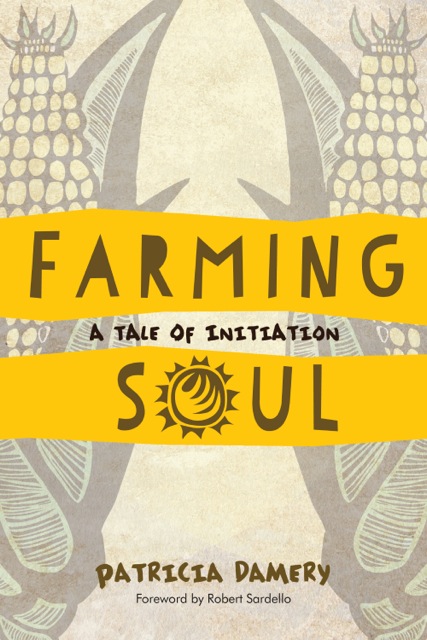
This issue also has a wonderful review of Farming Soul: A Tale of Initiation by Bonnie Bright, founder of Depth Psychology Alliance. 

 And last, but not least, for a lively evening and day, consider attending David Abram's workshop in Point Reyes Station, California, sponsored by Point Reyes Bookstore:


WHEN:
Friday, April 19, 7 P.M.
Becoming Animal: An Evening with David Abram
$20


Saturday, April 20, 9 A.M.–4 P.M.
Wildness and Shadowed Wonder: A daylong workshop with David Abram, Linda Hogan, and Dale Pendell
$100

POINT REYES STATION, CA—sponsored by Point Reyes Books. Both events take place at the Dance Palace Community Center, 503 B Street, Point Reyes Station. For further details and to purchase tickets, visit www.ptreyesbooks.com